Iceland’s South Coast: Complete Guide to Seljalandsfoss, Skógafoss, Reynisfjara & Dyrhólaey

Basalt columns at Reynisfjara Black Sand Beach in Iceland

The South Coast is the Golden Circle’s bigger, wilder cousin — two thundering waterfalls you can walk right up to (one of them from behind), a black sand beach with basalt columns and sea stacks, and a glacier that’s calving icebergs a short walk from the road. It’s a longer day than the Golden Circle, but every stop is a genuine showstopper. Here’s what’s actually at each one, how long to budget, and a couple of safety notes that matter more here than almost anywhere else in Iceland.

Basalt columns at Reynisfjara Black Sand Beach in Iceland

What’s on the South Coast Route

The “South Coast” usually refers to the stretch of Route 1 running from Reykjavík to Vík (and sometimes on to Jökulsárlón for those with an extra day). The core stops, in order, are:

  • Seljalandsfoss — a 60-meter waterfall you can walk behind
  • Skógafoss — a wide, powerful waterfall with a climbable staircase to the top
  • Sólheimajökull — a glacier tongue where you can join a guided hike or ice climb
  • Reynisfjara — Iceland’s most famous black sand beach, with basalt columns and sea stacks
  • Dyrhólaey — a dramatic sea arch and cliff viewpoint, home to nesting puffins in summer
  • Vík í Mýrdal — the small coastal village that makes a natural turnaround point

Many visitors continuing further east add Jökulsárlón Glacier Lagoon and Diamond Beach, about two hours past Vík — doable as a very long single day, but more comfortable as an overnight trip.

Seljalandsfoss

View from behind Seljalandsfoss Waterfall in South Iceland

Seljalandsfoss drops 60 meters over what used to be the coastline before the sea receded, and it’s one of the only waterfalls in Iceland you can walk fully around, passing behind the curtain of water itself. The path behind the falls is often muddy or icy depending on the season, so waterproof shoes are worth having — and expect to get sprayed no matter how careful you are.

A short, easy walk (about 10 minutes) along the cliff face takes you to Gljúfrabúi, a smaller waterfall tucked inside a narrow canyon that most tour buses skip. It’s partly hidden behind a rock wall, so you’ll get your feet wet wading in over stepping stones — but it’s one of the best-kept secrets on the whole route.

Gljúfrabúi waterfall hidden inside a narrow canyon in South Iceland

Parking at Seljalandsfoss costs around 1,000 ISK, paid via the checkit.is app or at the machine on site.

Skógafoss

Rainbow in the spray of Skógafoss Waterfall in Iceland

About 30 minutes further east, Skógafoss is a different kind of impressive: 25 meters wide and dropping 60 meters in a single, thunderous sheet, with a near-constant rainbow on sunny days. A staircase of a few hundred steps climbs the cliff beside it to a viewing platform at the top, where the Skógá River continues upstream through a canyon dotted with smaller waterfalls if you want to keep walking.

Parking is around 1,000 ISK via the Parka app.

Sólheimajökull Glacier

Sólheimajökull Glacier on Iceland’s South Coast

A short detour off the main road brings you to Sólheimajökull, an outlet glacier of Mýrdalsjökull that’s retreated dramatically over the past few decades — the walk from the car park to the ice is noticeably longer than it was even ten years ago. You can’t safely walk onto the glacier without crampons and a guide, but it’s a striking stop even just from the viewpoint, and one of the most accessible places in Iceland to book a guided glacier hike or ice climbing session on short notice.

Parking is around 750 ISK via the Parka app.

Reynisfjara Black Sand Beach

Reynisfjara Black Sand Beach

Reynisfjara is the postcard black sand beach: hexagonal basalt columns stacked like organ pipes, the sea stacks of Reynisdrangar rising offshore, and a cave you can walk into (Hálsanefshellir) framed by the same columns. It’s genuinely one of the most photographed places in Iceland, and it’s also one of the most dangerous if you don’t take it seriously.

Sneaker waves — unpredictable waves that surge much further up the sand than the ones before them — have caused fatalities here, and they’re the reason the beach now operates on a color-coded safety zone system (green, yellow, and red areas marking how close it’s currently safe to get to the water). Storms and shifting tides have also reshaped parts of the shoreline in recent years, so pathways and access can vary; always follow the posted signage and never turn your back on the ocean. Keep a solid distance from the waterline, don’t climb on wet rocks, and don’t go into the cave if waves are reaching it.

Parking costs 750–1,000 ISK depending on which car park you use, via the Parka app.

Dyrhólaey

A few minutes from Reynisfjara, Dyrhólaey is a promontory with a natural sea arch large enough that small boats have sailed through it, plus sweeping views back along the black sand coastline. From around mid-May to late June, the upper cliff area closes (or restricts hours to 9 AM–7 PM) to protect nesting seabirds, including one of the South Coast’s more reliable spots to see puffins — check before you go if you’re visiting in early summer, since exact dates shift with the season.

There’s no entrance fee, only parking (via the Parka app).

Vík í Mýrdal

Vík is the South Coast’s main village and a natural place to stop for food, fuel, or the night. It sits beneath the Mýrdalsjökull ice cap, which covers the active Katla volcano — a fact that gives the black church on the hill above town its dramatic backdrop. If you’re continuing on to a Katla ice cave tour, Vík is usually where those tours meet.

How Long Does the South Coast Take?

Budget a full day (9–11 hours round trip from Reykjavík) if you’re covering Seljalandsfoss through Reynisfjara and Dyrhólaey and want real time at each stop rather than a quick photo. It’s a longer day than the Golden Circle — driving time alone is around 5 hours round trip from Reykjavík to Vík — so start early.

Self-drive or tour? The Ring Road is well-maintained and easy to follow, so self-driving works well in summer. In winter, conditions can change quickly and daylight is short, which is when a guided tour earns its keep — someone else handles the driving and the road checks, and most tours bundle in a glacier walk or ice cave that would otherwise mean arranging a separate booking and meeting point.

Best Time to Visit

  • Summer (June–August): Long daylight hours make it possible to see everything without rushing, and it’s the only season you can visit Dyrhólaey’s upper cliffs and reliably spot puffins — but it’s also the busiest time on the route.
  • Winter (November–March): Fewer crowds, dramatic snow-dusted scenery, and a chance at the northern lights on a clear night — plus this is peak season for ice cave tours near Vík. Roads can close in bad weather, so build in flexibility.
  • Spring and autumn: Good compromise season — shorter days than summer but noticeably fewer tour buses at each stop.

Frequently Asked Questions

Is the South Coast doable in one day from Reykjavík?

Yes, as far as Vík — Seljalandsfoss, Skógafoss, Reynisfjara, and Dyrhólaey are all comfortably covered in one long day. Going all the way to Jökulsárlón and back in a single day is possible but very long; an overnight makes it far more relaxed.

Is Reynisfjara safe to visit?

Yes, if you follow the safety guidance — stay well back from the water, respect the marked safety zones, and never turn your back on the ocean. Sneaker waves are unpredictable and have caused serious accidents, which is the one rule worth taking seriously here above all others.

Do I need a 4×4 to drive the South Coast?

No — Route 1 to Vík is a paved main road, fine in a regular car in normal summer conditions. A 4×4 becomes more useful (or necessary) in winter, or if you’re heading off the Ring Road toward the Highlands.

What should I combine with the South Coast?

A glacier hike or ice climb at Sólheimajökull, or a Katla ice cave tour from Vík, are the two most popular add-ons — several of our tours bundle one of these in already.

Ready to Explore the South Coast?

If you’d rather skip the planning and logistics, we offer several South Coast tours from our trusted local partners to choose from:

All depart from Reykjavík with small groups and an experienced local guide.

Golden Circle Iceland: Complete Guide to Þingvellir, Geysir & Gullfoss

Gullfoss waterfall cascading into a canyon on Iceland's Golden Circle

More people take the Golden Circle than any other route in Iceland, and it’s easy to see why: three completely different natural wonders — a rift valley where two continents pull apart, a geyser that erupts on a five-minute clock, and a waterfall that drops in two dramatic stages — all within a loop you can comfortably drive in a day from Reykjavík. Here’s what’s actually at each stop, how long to budget, and a few things that catch first-time visitors off guard.

Gullfoss waterfall cascading into a canyon on Iceland's Golden Circle

What’s on the Golden Circle Route

The “Golden Circle” isn’t an official place name — it’s the roughly 300 km (190 mile) loop connecting three main stops east of Reykjavík:

  • Þingvellir National Park — a UNESCO World Heritage site where the North American and Eurasian tectonic plates are visibly pulling apart, and the site of Iceland’s original parliament
  • Geysir Geothermal Area — home to Strokkur, the geyser that erupts every 5–10 minutes
  • Gullfoss Waterfall — a two-tiered waterfall dropping into a dramatic canyon

Most itineraries also add a fourth stop — the Secret Lagoon, Keríð crater, or Friðheimar tomato farm are all popular — but these three are the core of the route.

Þingvellir National Park

Rift valley at Þingvellir National Park in Iceland

Þingvellir is where Iceland’s Alþingi, one of the oldest parliaments in the world, was founded in 930 AD, and it’s also where you can stand in the rift valley between two tectonic plates — walking through Almannagjá gorge, you’re technically walking between continents. It’s also the only place on the Golden Circle where you can snorkel or dive, in the glacier-fed Silfra fissure, which has some of the clearest water in the world.

Entry to the park itself is free, but there’s a parking fee of around 1,000 ISK for a regular car, valid for the day across the main car parks.

Geysir Geothermal Area

Strokkur geyser erupting at the Geysir geothermal area on Iceland's Golden Circle

The original “geyser” — the English word actually comes from this site’s Great Geysir, which is mostly dormant now. The reliable performer today is Strokkur, which erupts every 5–10 minutes and sends boiling water up to 20 meters (66 feet) into the air. It’s a short, easy walk around the geothermal field, with steaming pools and mineral-streaked ground worth slowing down for.

One thing worth knowing before you go: parking at Geysir switched from free to paid in late 2024, so if you’ve read an older guide claiming it’s free, that’s now out of date — budget around 1,000 ISK per car.

Gullfoss Waterfall

Gullfoss (“Golden Falls”) drops 32 meters (105 feet) in two stages into a rugged canyon, and on a sunny day the spray throws a rainbow across the whole gorge. It’s the one stop on the route that’s genuinely free all around — no entrance fee, no parking fee. There are viewing platforms at different levels, so it’s worth doing both the upper and lower paths if the ground isn’t icy.

How Long Does the Golden Circle Take?

Budget 6–8 hours for the full loop from Reykjavík if you want real time at each stop rather than a photo-and-go visit — more if you’re adding the Secret Lagoon, Keríð, or a farm stop. Driving time between the three main sites is modest (Reykjavík to Þingvellir is 45–60 minutes, and the other two stops are 30–45 minutes apart), so most of your day goes to actually being at each place, not driving between them.

Self-drive or tour? Self-driving gives you flexibility on timing and extra stops, and the roads are well-maintained and easy to follow. A guided tour is worth it in winter, when road and weather conditions can change fast, or if you’d rather have someone handle the driving so you can actually look out the window — plus most tours bundle in an activity like snorkeling or a soak that would otherwise mean a separate booking.

Best Time to Visit

The Golden Circle is a year-round route, and each season has a different draw:

  • Summer (June–August): Long daylight hours, easiest driving, and the busiest crowds — go early morning or late afternoon to beat the tour bus rush.
  • Winter (November–March): Fewer people, snow-covered landscapes, and a shot at the northern lights on a clear night after dark. Check road conditions before setting out.
  • Spring and autumn: The shoulder-season sweet spot — noticeably fewer crowds than summer, without winter’s driving conditions.

Frequently Asked Questions

Is the Golden Circle worth doing if I only have one day in Iceland?

Yes — it’s the most accessible way to see genuinely different landscapes (geothermal, geological, waterfall) close to Reykjavík without a long drive, which is exactly why it’s the most popular day trip in the country.

Do I need to pay to enter Þingvellir, Geysir, or Gullfoss?

Entry to all three sites is free. Parking is paid at Þingvellir and Geysir (around 1,000 ISK each), and free at Gullfoss.

Can I do the Golden Circle without a car?

Yes, plenty of guided tours run daily from Reykjavík and handle all the driving — useful if you’d rather not navigate winter roads yourself or want an activity like Silfra snorkeling included.

What should I combine with the Golden Circle?

Popular add-ons include Silfra snorkeling at Þingvellir, the Secret Lagoon, Keríð volcanic crater, and Sky Lagoon on the way back to Reykjavík — several of our tours bundle one of these in already.

Ready to See the Golden Circle?

If you’d rather skip the planning and let a local guide handle the driving, we offer several Golden Circle tours from our trusted local partners to choose from:

All depart from Reykjavík with small groups and an experienced local guide.

Best Time to See the Northern Lights in Iceland (Month-by-Month Guide)

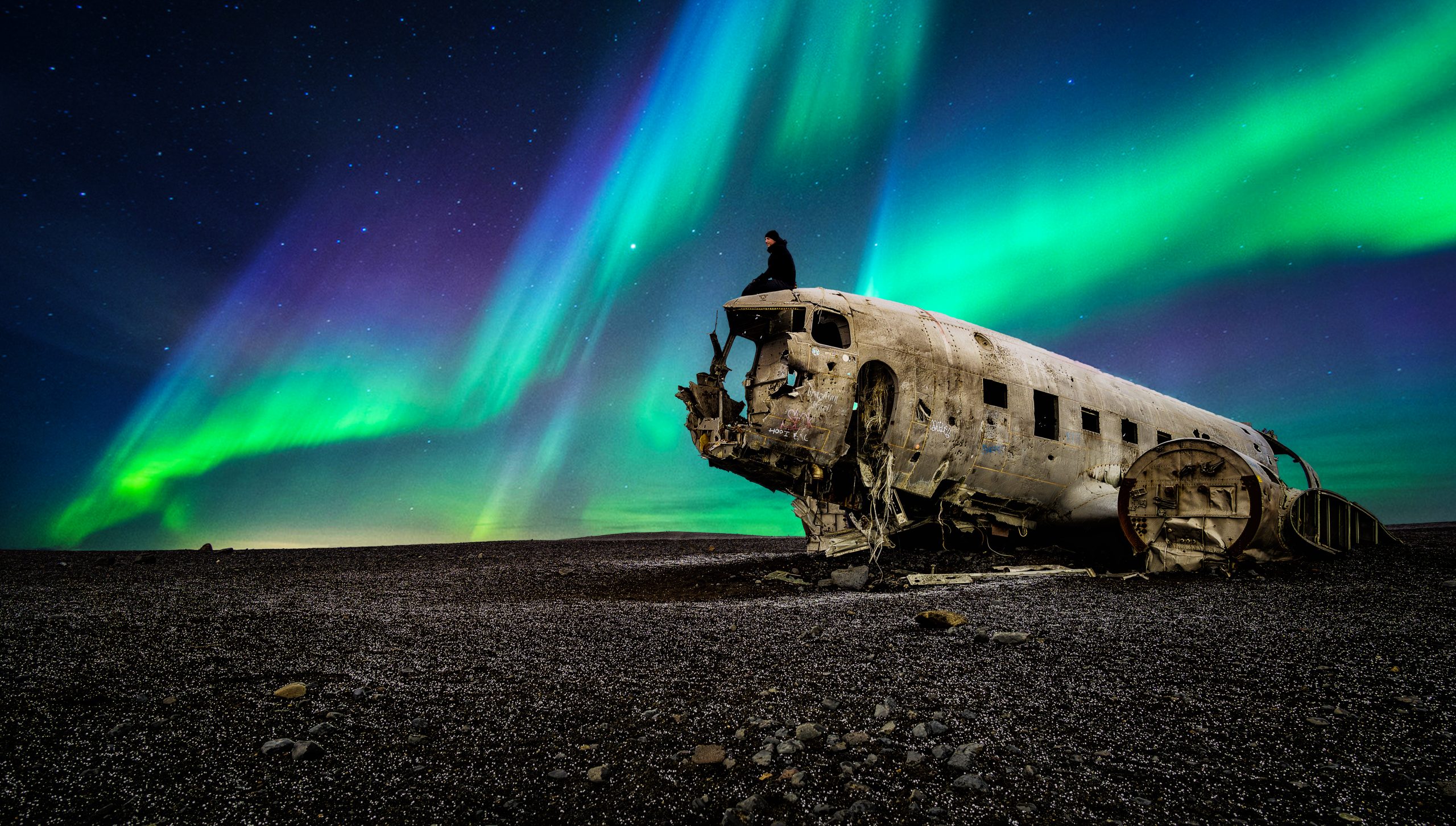
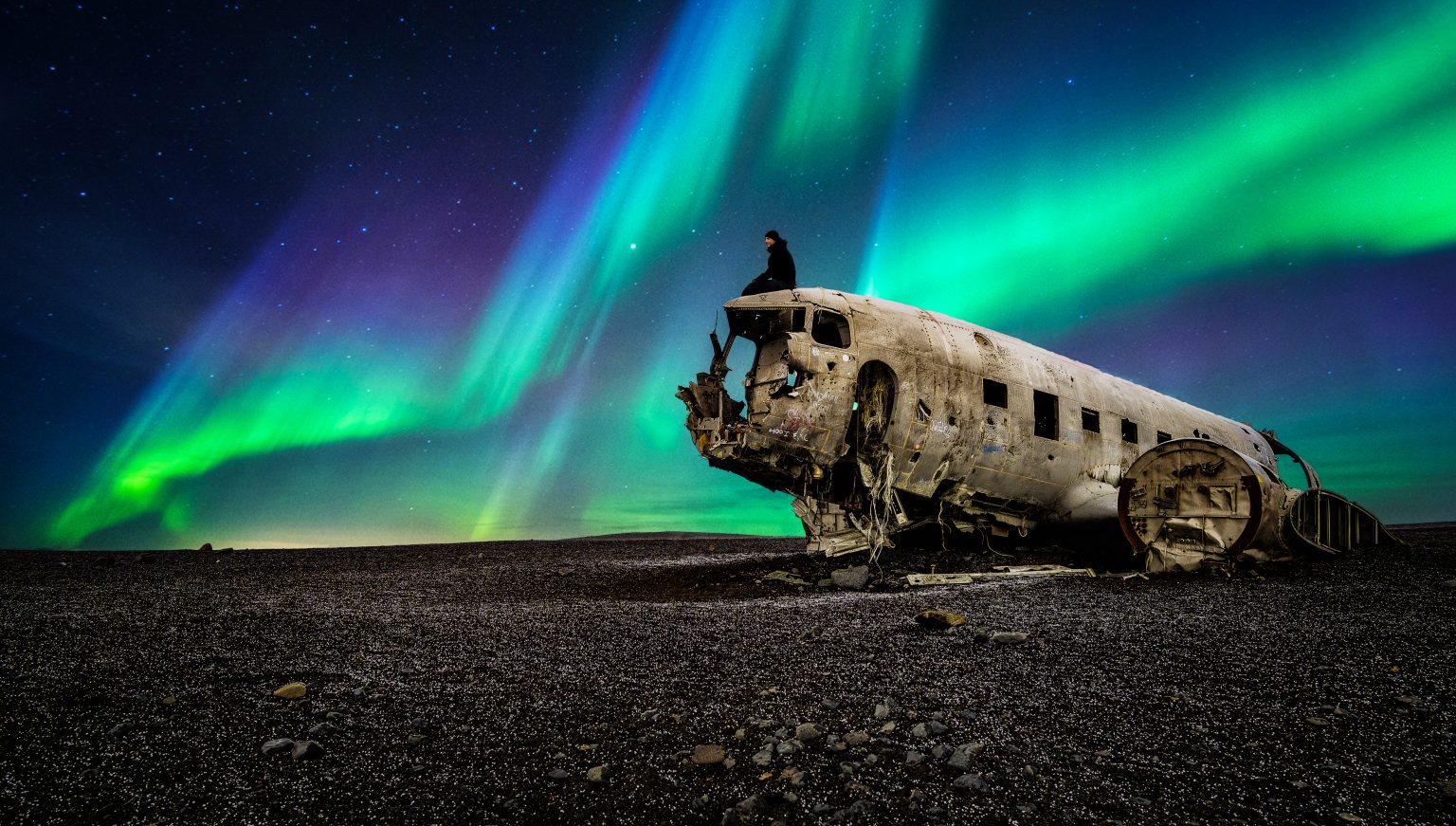
Person standing on the DC-3 plane wreck at Sólheimasandur under the Northern Lights in Iceland
Northern lights over the DC-3 plane wreck at Sólheimasandur, Iceland

There’s a reason the northern lights top so many Iceland bucket lists: nothing else quite matches the sight of green light rippling across a dark sky above lava fields and glaciers. But aurora sightings aren’t guaranteed on just any night — timing your trip around the right months, the right hours, and the right conditions makes all the difference. Here’s what actually matters if seeing the lights is a priority for your visit.

When Aurora Season Runs

Aurora season in Iceland runs from late August/early September through mid-April, which is simply the window when the sky gets dark enough at night for the lights to be visible — the aurora itself is active year-round, but summer’s near-constant daylight hides it completely.

  • September – October: Nights are lengthening fast and the weather is still relatively mild, making this a comfortable time to start aurora-hunting. Skies are often clearer than in the depths of winter.
  • November – February: This is peak season. You get the longest stretches of darkness — nearly 19–20 hours a day in December and January — which means far more opportunities each night. It’s also peak winter weather, so pack for cold and be ready for cloud cover to force a change of plans.
  • March – mid-April: Nights are still long enough for good viewing, and many visitors like this stretch because it pairs aurora chances with noticeably milder days than midwinter.
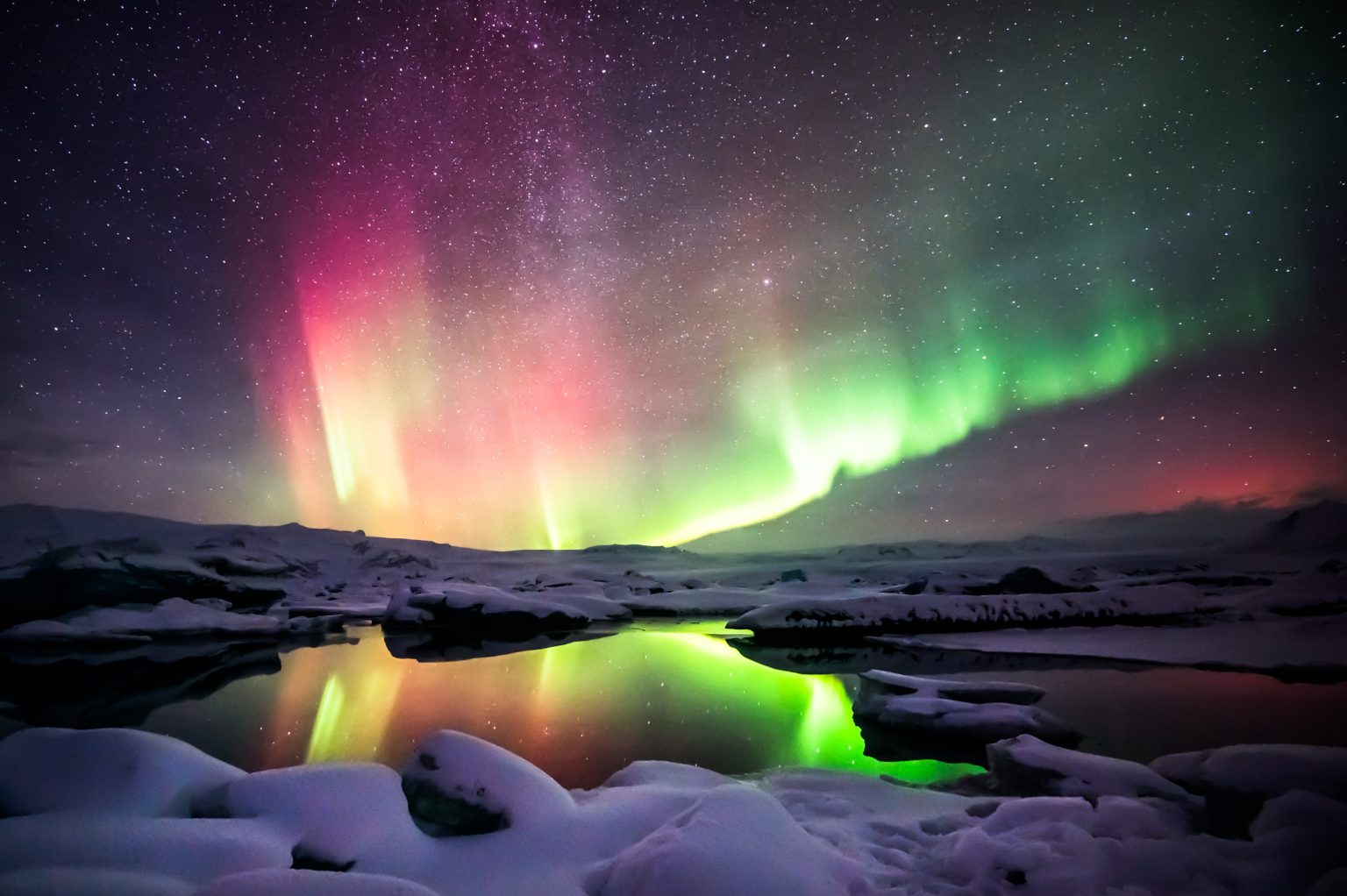
Aurora borealis over Icelandic landscape

Outside this window, from roughly late April through early August, the sky simply never gets dark enough, no matter how active the aurora is.

Best Time of Night to Look Up

Even in peak season, showing up outside at any random hour isn’t enough. Three things have to line up:

  • Darkness: Your best odds are typically between 10 pm and 1 am, with the single highest-probability hour usually falling around magnetic midnight — roughly 11 pm in Iceland. Twilight on either side is usually too bright to see fainter displays.
  • Clear skies: This is the biggest variable in Iceland’s changeable weather. A strong aurora forecast means nothing if cloud cover blocks the sky, so it’s worth checking the forecast the same evening rather than planning days ahead.
  • Low light pollution: Getting away from Reykjavik’s city lights, or any town, makes a real difference — even a moderately active aurora can be washed out by nearby streetlights.

When all three line up, you don’t need an unusually strong aurora to get a great view — a modest display on a clear, dark night often beats a strong one fighting through clouds or city glow.

Tips for Actually Seeing Them

  • Stay more than one night. Cloud cover is common across Iceland even during prime aurora season, so a single clear night is never guaranteed. Three or four nights gives the weather room to cooperate at least once.
  • Get away from town. Head toward the south coast, the Snaefellsnes peninsula, or anywhere with an unobstructed view away from streetlights — dark-sky spots make a bigger difference than chasing the highest forecast number.
  • Check the forecast the same day. The Icelandic Met Office’s aurora forecast is updated daily and is far more useful the evening of than a forecast checked a week out.
  • Dress for standing still in the cold. You’ll get the best results waiting and watching rather than moving around, so warm layers matter more than most people expect.
  • Let your eyes adjust. It takes 15–20 minutes in the dark for your eyes to pick up fainter aurora activity — avoid looking at your phone screen in the meantime.

Frequently Asked Questions

When is the best month to see the northern lights in Iceland?

December and January have the longest, darkest nights and the most viewing windows each night, making them the strongest months statistically. That said, the full season — late August through mid-April — all offers real chances, and September/October and March both pair good darkness with milder weather.

What time of night are the northern lights visible in Iceland?

Your best odds are between 10 pm and 1 am, with activity typically peaking around magnetic midnight — roughly 11 pm in Iceland. Skies need to be dark and clear for the lights to be visible.

Do you need a tour to see the northern lights in Iceland?

No — you can watch from anywhere with a clear, dark sky. A guided tour simply improves your odds, since guides track the aurora and weather forecasts nightly and drive to wherever the skies are clearest, away from city light pollution.

Can you see the northern lights from Reykjavík or Akureyri?

Yes, both cities run northern lights tours, but city lights wash out fainter displays, so both types of tours drive out to darker surrounding areas for the best view.

Ready to Go Aurora-Hunting?

If you’d rather leave the timing and route-planning to someone who tracks the forecast every night, we offer several northern lights tours from our trusted local partners to choose from:

All of them run within the season described above, with guides chasing the clearest, darkest skies each night.

Snorkeling in the Silfra Fissure: Wetsuit vs. Drysuit?

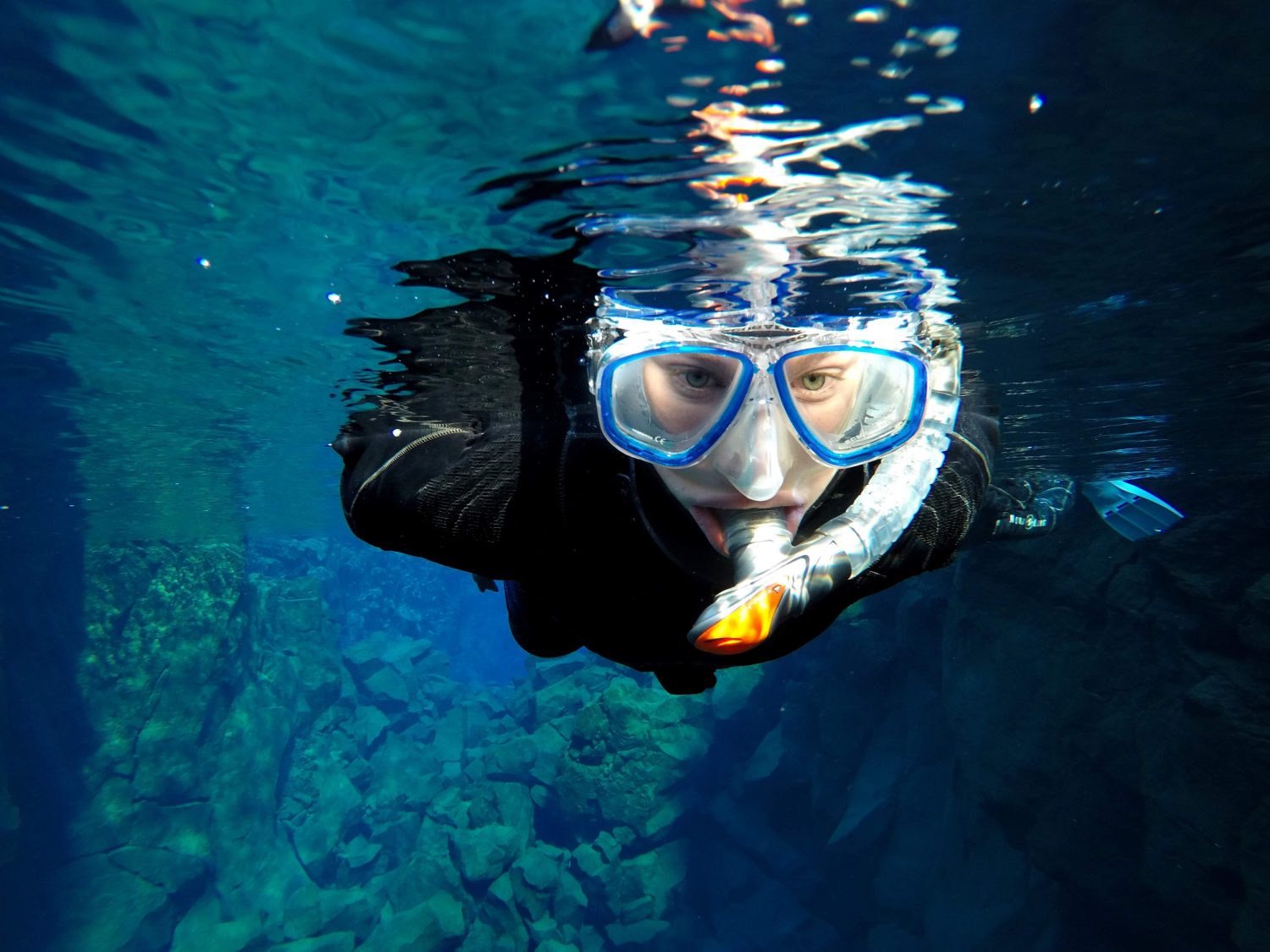
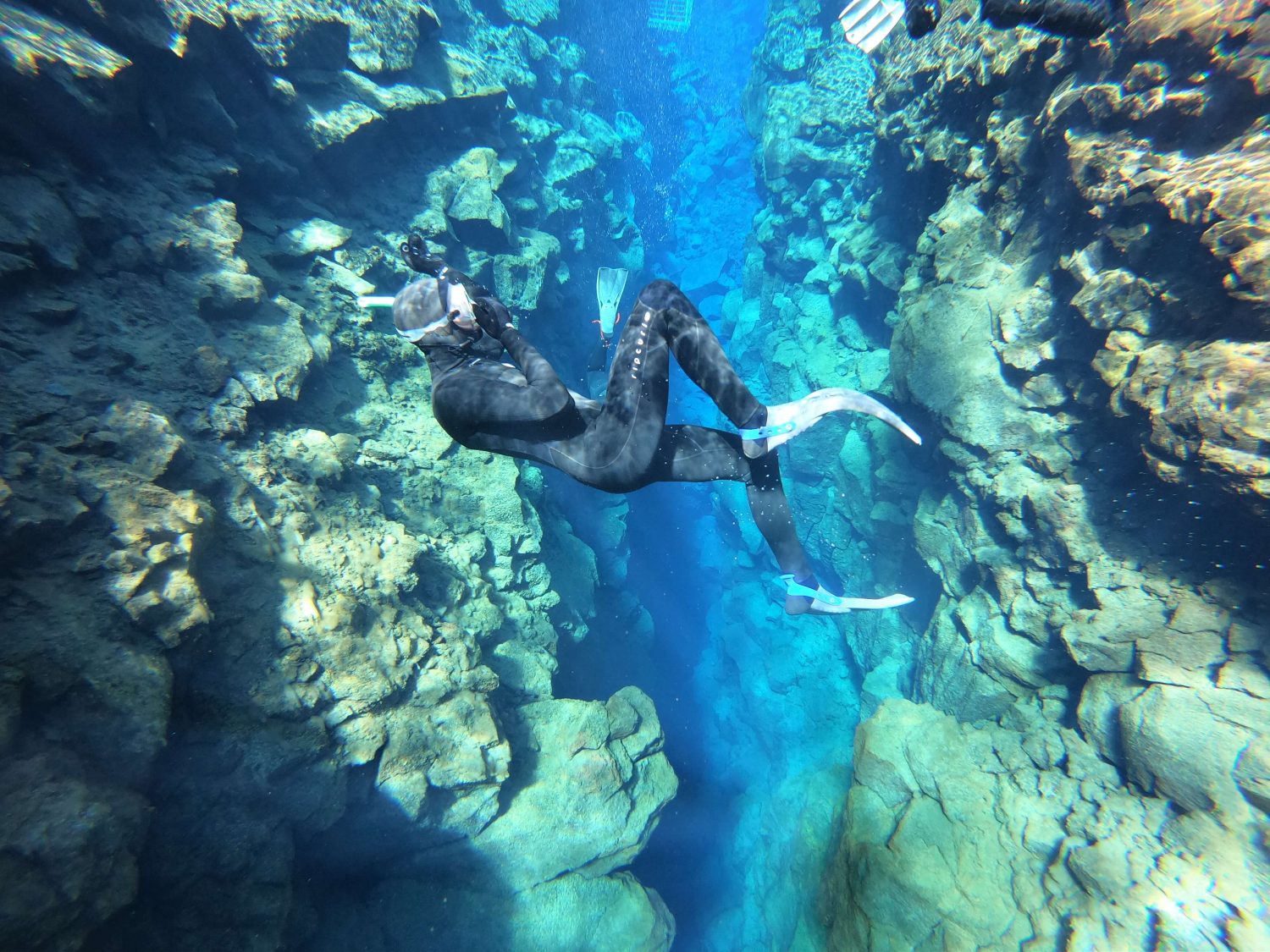
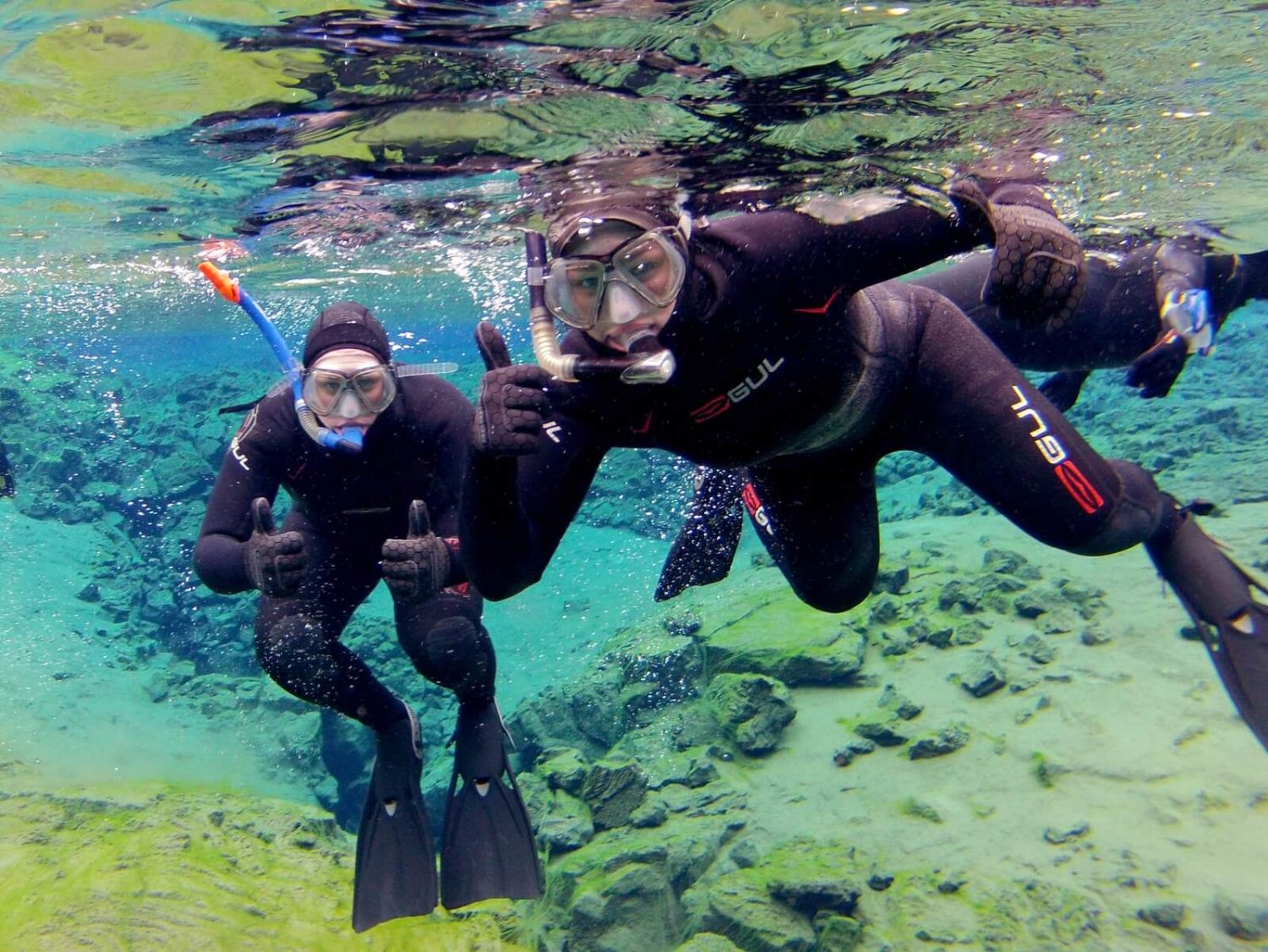
Wetsuit Snorkeling in Silfra

One of the most common questions that we get is what is the difference between a drysuit and a wetsuit when it comes to snorkeling in Silfra? And which option should you choose? Let’s look at both options and help you decide which option is perfect for you!

Snorkeling in the Silfra Fissure
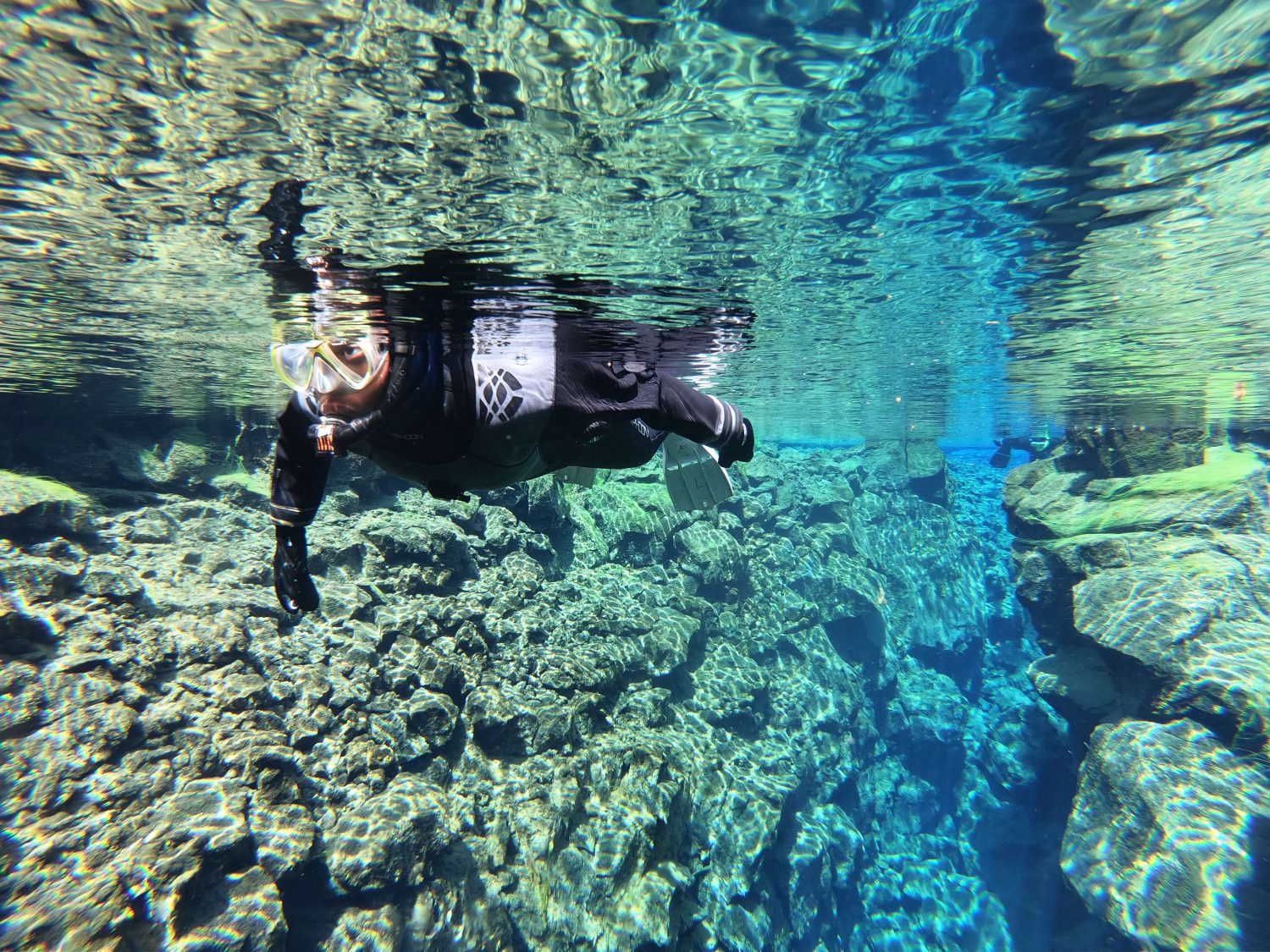
Drysuit Snorkeling in Silfra

Snorkeling in Silfra

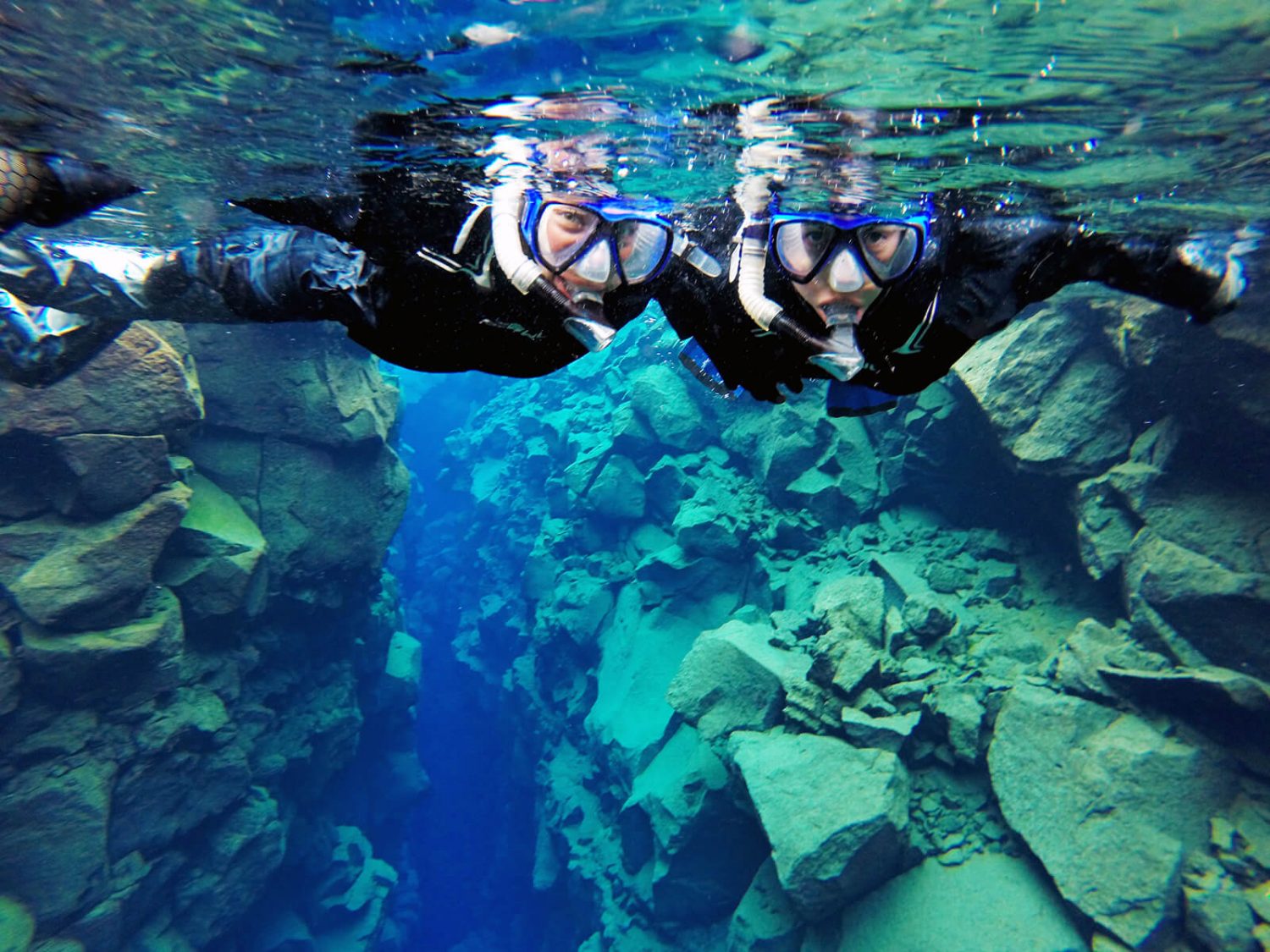
Snorkeling in Silfra is one of the most popular activities on the Golden Circle route. It’s no wonder that this activity draws so many visitors, as it is a completely unique experience. Nowhere else in the world are you able to snorkel between two tectonic plates. Silfra is located in Þingvellir National Park, which is where the North American and Eurasian tectonic plates are slowly moving apart.

No less spectacular is Silfra’s crystal clear water which offers visibility of over 100 meters (328 ft.) on most days. The water in Silfra is melted glacier water which goes through a natural filtering system as it makes it’s way to the Silfra fissure. The water is filtered through lava and it takes between 30 and 100 years for it to travel from the glacier and to the fissure. Once it reaches Silfra the water is crystal clear. While in Silfra you should try it! It’s refreshingly cold and delicious!

Even though Snorkeling in Silfra is a popular activity, availability is limited. This is due to environmentally friendly policies and regulations aimed to protect the environment of Silfra. It’s also to ensure safety in Silfra and give guests the best experience possible!

Good to know before you book

Before we get into which type of suit to choose for your snorkeling tour, here are some good-to-know tips to help you decide if this activity is for you:

  • For the snorkeling tour, you do need to know how to swim. You do not need to be an expert or even a strong swimmer, but you need to know how to swim.
  • Regardless of what type of suit you book, you will experience some cold. We’ll get into this one a little bit later, but know that no suit will completely protect you from the cold water.
  • The age limit in Silfra is 14 years of age. We do sometimes make exceptions if the child is close to 14 years of age, can swim and is physically fit. If you are traveling with a child under 14, be sure to email us before booking your tour!
  • All guests must meet some minimum size requirements to be able to go on the tour. To be able to participate in the snorkeling tour you must be at least 150 cm (4’11”) tall and weigh at least 45 kg (99 lbs).
  • All guests must read and sign the Silfra snorkeling medical statement.


Now that we’re caught up with the basic, let’s get into the different suit options!

Drysuit Snorkeling in Silfra Iceland
Drysuit Snorkeling in Silfra

Drysuit snorkeling in Silfra

The original snorkeling in Silfra tour features drysuits. As the name implies, drysuits are waterproof and designed to keep your body dry while you are in the water. As the water in Silfra has a temperature of about 2°C year-round, this is the most common way to snorkel in Silfra.

Drysuits come with a cap that covers your head but it will not fully cover your face. Most of the drysuits have booties attached which will also keep your feet dry. You will also get gloves, but these are not waterproof. When wearing a drysuit you are most likely to feel the cold on your face (lips especially) and hands. For most people, the cold sensation goes away quickly as you adjust to the water temperature.

The drysuits used for this tour are of top quality, but there is always a possibility that water will leak into your suit. To minimize this potential, your guide may use straps or other materials to tighten your suit around your ankles, wrists and/or neck. This can sometimes feel uncomfortable, but it will help keep you dry.

Because of the drysuit’s design, air is present inside the suit. This will keep you buoyant in the water so you spend the majority of your time gently floating on the surface of the water.

If you choose a drysuit, we recommend wearing thermal underwear under your suit. Go for wool or synthetic materials and avoid cotton. Your base layer will help keep you warm, and it will also feel more comfortable for you to have a layer of personal clothing. You will also get a so-called “teddy suit” which you’ll put on over your personal layer, before putting on the dry suit.

The drysuit is for you if you:

  • Prefer to be as dry and warm in the water as possible under the circumstances
  • Can swim but are not a strong swimmer
  • Would like to gently float on the surface instead of playing around in the water
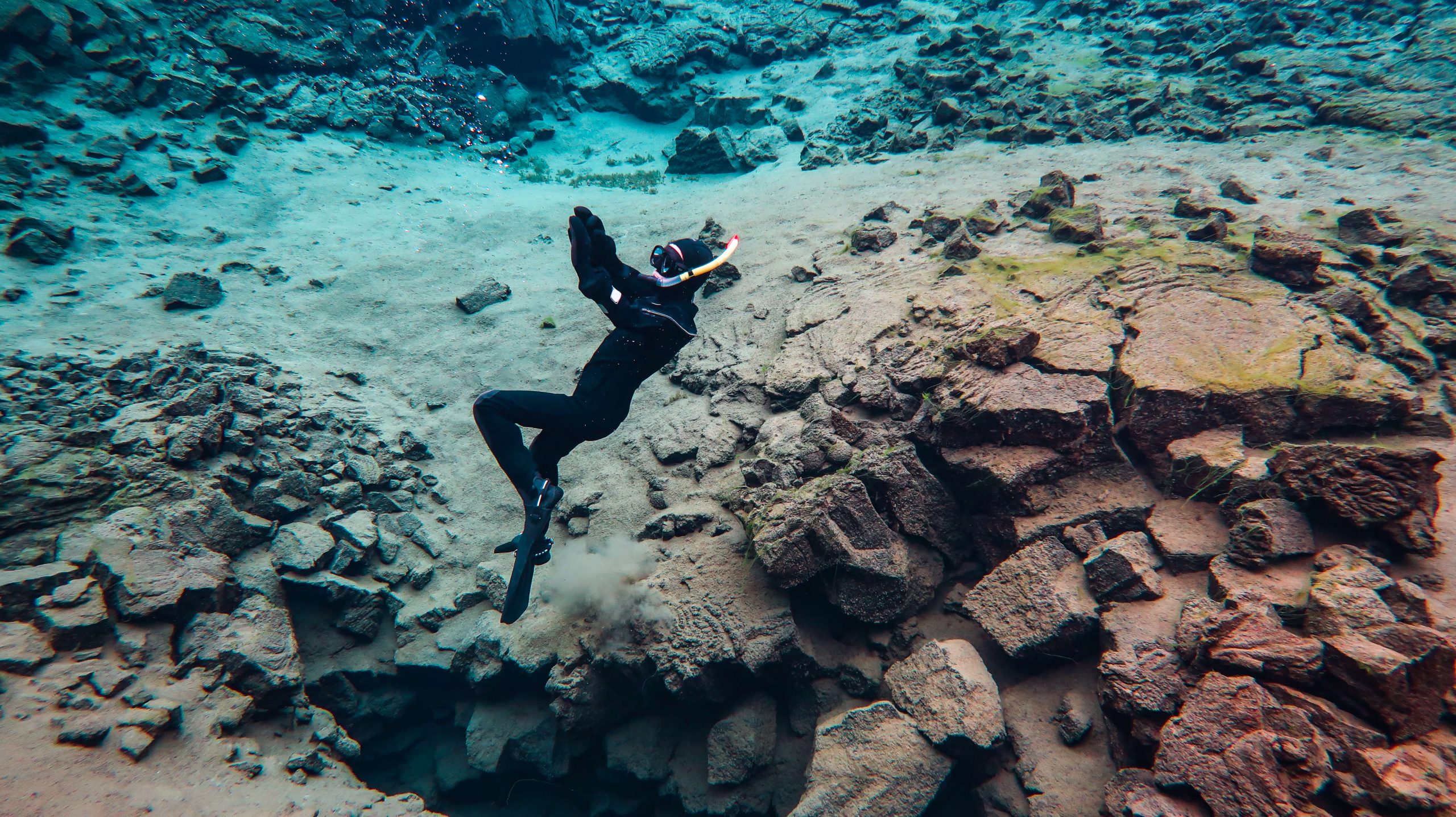
Wetsuit Snorkeling in Silfra

Wetsuit Snorkeling in Silfra

Wetsuits are a relative newcomer in Silfra. Although this option has been available for some time, it’s only recently become a popular option for travelers. Unlike drysuits, wetsuits are not waterproof and therefore you will get wet. The water inside your suit will slowly be warmed up by your natural body temperature, but you will not be as warm as you would be in a drysuit.

When you wear a wetsuit, less air is present inside the suit as compared to the drysuit. This means that you will not float on the surface as easily as when you wear a drysuit. Less air inside the suit means that you will have more mobility in the water and you can dive underneath the surface. 

If you choose a wetsuit we recommend that you wear a swimsuit underneath your suit. It’s also good to bring a towel.

The wetsuit is for you if you:

  • Are prepared to get wet and possibly experience cold during the tour
  • Are a strong swimmer
  • Want to be able to move more freely under the water
  • Have a secret desire to be a mermaid for a day
Drysuit Snorkeling in Silfra

Booking your Silfra Snorkeling tour:

Now that you are all the wiser about which type of suit to choose for Silfra, all that’s left is to book your tour. 

No matter which type of suit you choose, you will need to provide us with some details about your size. In the booking process, you will need to provide us with your height, weight and shoe size. Being honest about your size is very important here, as having a properly fitted suit will greatly enhance your experience.

Click here to book a drysuit snorkeling tour OR click here to book a wetsuit snorkeling tour

Click here to book a snorkeling and Golden Circle combo tour

When booking the Golden Circle combo tour, you will be able to choose a suit type after adding the tour to your shopping cart.

Drysuit Snorkeling in Silfra
Couple snorkeling in Silfra

Booking with different suit selections

So what happens when you want to snorkel in a wetsuit, but your travel partner wants to snorkel in a drysuit? Not to worry, there is an easy solution to this! Just follow these easy steps:

  • Start by making sure there is enough availability on the date and time you have selected. You can do this by going into the drysuit option and selecting the date. Available time slots on that day will appear beneath the booking calendar. If there are limited spots available, an orange icon will appear next to the time to show how many spots are left. If you have a large group of people, you can also select the drop-down menu under “Participants” and see the number of spots left on the tour. Note that availability is shared between the drysuit and wetsuit options, so if there are 10 spots available for the drysuit option there are a total of 10 spots available regardless of suit type.
  • Once you have checked that enough spots are available, go ahead and book the drysuit option for those who want to snorkel in a drysuit. Select the number of participants, remember to add transportation if needed and hit the “Book” button. You will be taken to an order summary page. Instead of checking out, click “continue shopping” or navigate to another page on the website. Your drysuit tour will stay in your shopping cart.
  • Navigate to the wetsuit option, select the same date, time and how many persons for the wetsuit. Remember to add transportation if needed and hit the “Book” button again.
  • You can now either continue to shop for tours or you can check out with both the drysuit tour and wetsuit tour in the same order.  Before checking out you will need to add information about your size so that we can select the right suit for you.
  • Having both options in one cart helps us identify groups that are traveling together. It also makes the checkout process easier for you as you will only have to enter payment once.
Wetsuit Snorkeling in Silfra Iceland
Wetsuit Snorkeling in Silfra

Book your tour

Now that you know all about the different suit options for snorkeling in Silfra, the only thing left to do is book your tour! You can view tours in Silfra here:

Drysuit Snorkeling in Silfra Tour

Wetsuit Snorkeling in Silfra Tour

Golden Circle & Snorkeling in Silfra Tour (choose either option for the suit)